
Most brain dump templates hand you a blank box and wish you luck. The box is the easy part. What decides whether a brain dump is worth doing is what happens to the pile afterwards, so this template covers both: empty your head first, then send each item somewhere it will actually be seen again.
You can fill it in on this page, print it, or copy the structure into whatever you already use.
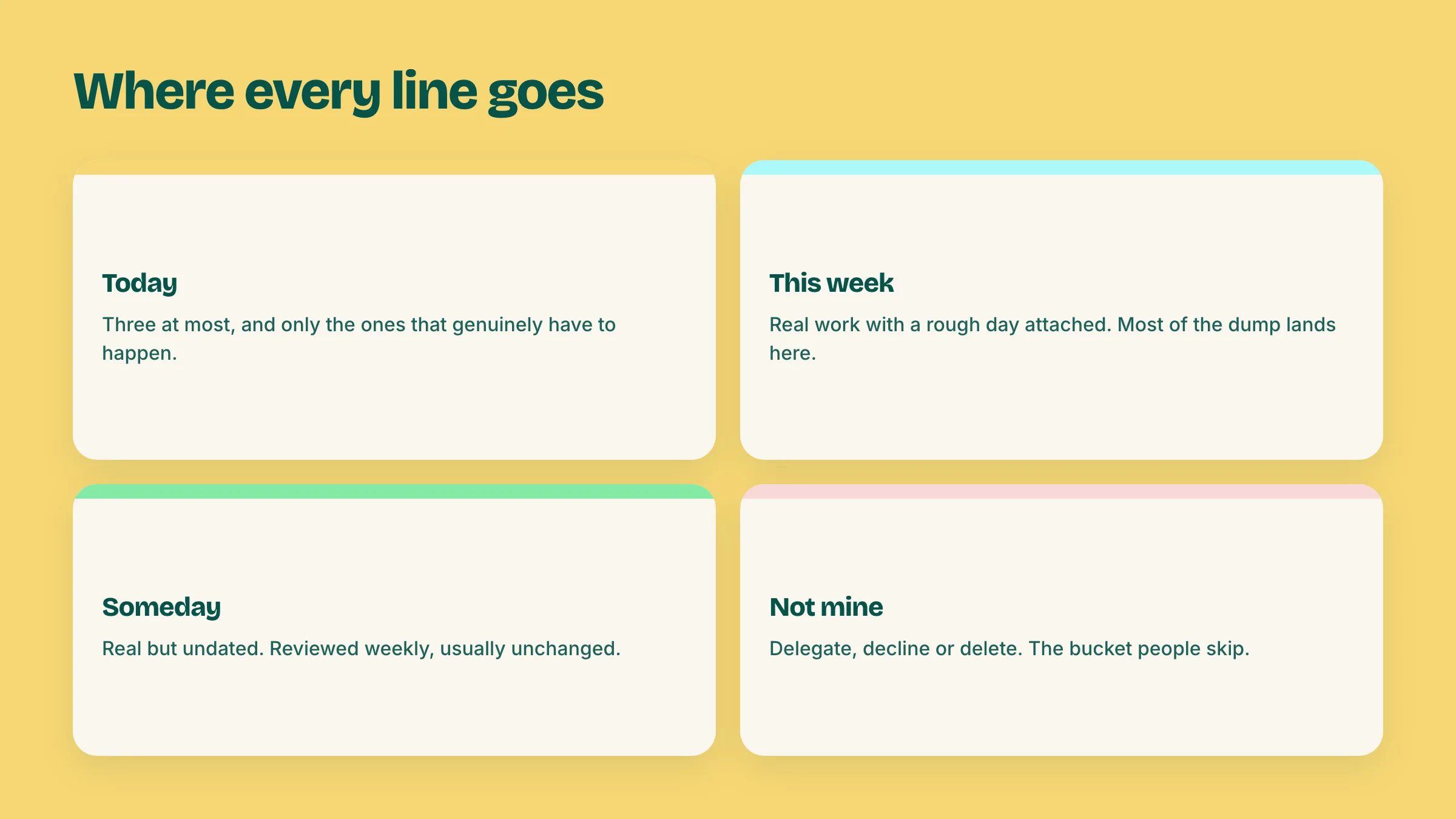
BRAIN DUMP (everything, in any order, no editing) - - - - - - THEN SORT EACH LINE INTO ONE OF FOUR TODAY the few things that genuinely happen today THIS WEEK real, dated, but not now SOMEDAY real, undated, review it weekly NOT MINE delegate it, decline it, or delete it
That is the whole thing. The four buckets matter more than they look, and the reason is in the next section.
One line each, any order, no editing. Keep going past the point where you think you are done.
Lines from the dump show up here, one at a time, as soon as you write them.
Nothing here yet.
Nothing here yet.
Nothing here yet.
Nothing here yet.
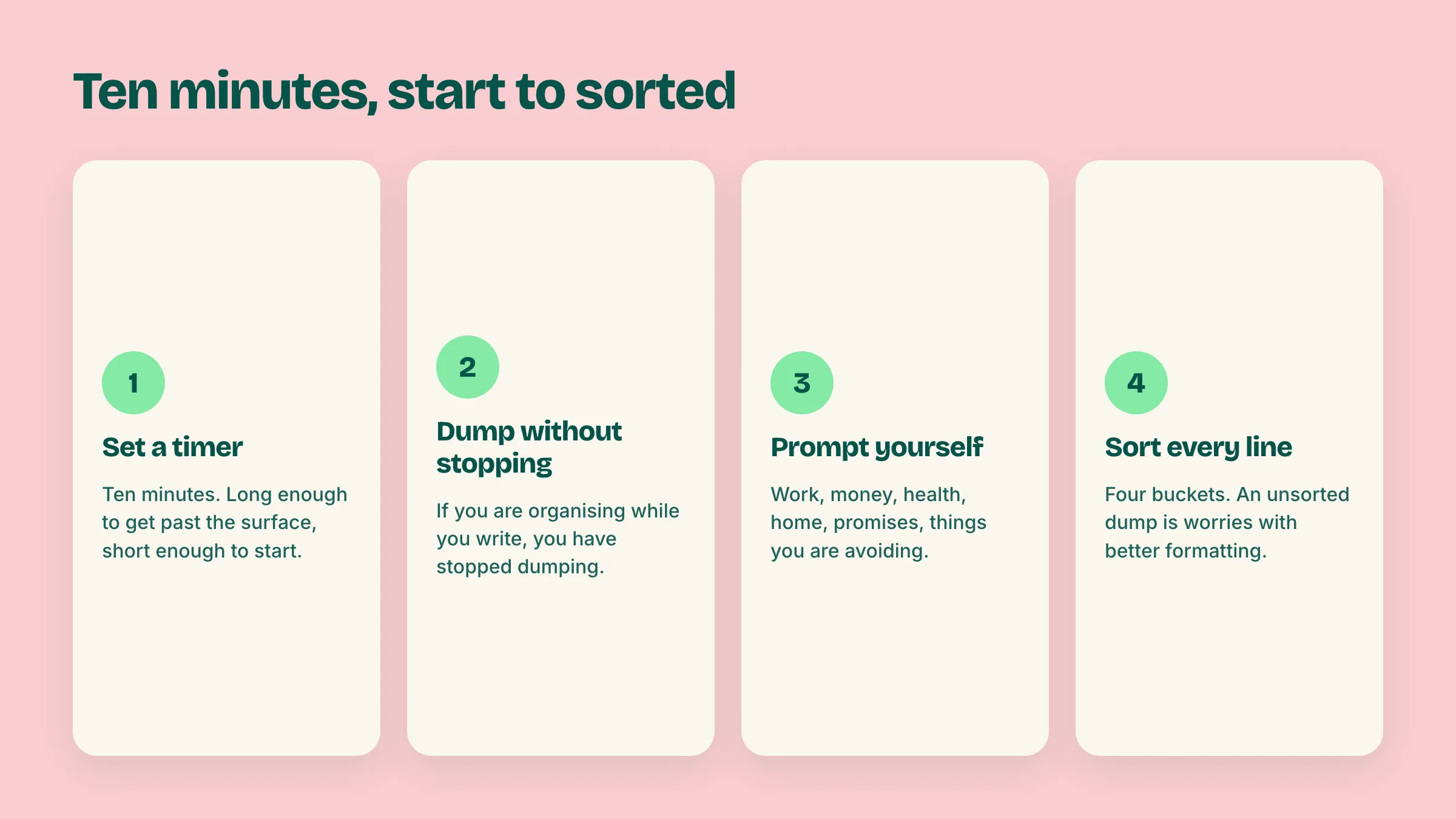
The dump. No categories, no order, no complete sentences. You are trying to empty a bucket, not organise one. Write "that email" if that is what it is called in your head, because the point is retrieval, not filing.
Keep going past the first pause. The first ten items arrive quickly and are usually the loud ones. The quiet background stressors, the thing you have been not-thinking about for three weeks, tend to surface just after the moment you think you are finished.
Today. Three items at most. Not the things you wish would happen, the ones that genuinely have to. A brain dump that turns into a twenty item day has just recreated the problem in a new font.
This week. Real work with a rough day attached. This is where most of the dump lands, and it is fine for it to sit here as long as it has a day rather than a vague intention.
Someday. Real but undated. Learning the guitar, switching banks, the trip you keep mentioning. These need a home that is not your working memory and not today's list. Look at this section once a week and most weeks change nothing.
Not mine. The bucket people skip and the one that does the most work. Some of what comes out of your head belongs to someone else, was never actually agreed to, or has quietly expired. Deleting an item is a legitimate outcome. So is sending a two line message that hands it back.
Printable. Download the blank PDF, one page, dump area on top and four sorting boxes underneath. Writing by hand is slower, which is a feature during the sorting step: you think about where things go instead of dragging them.
On this page. The version above saves in your browser as you type, so you can close the tab and come back to it. Sorting is a click per line, and you can print or download the sorted result.
In a notes app, Notion, or a bullet journal. Copy the four headings and use them as they are. Anything that lets you type fast and see the whole pile at once will do. Avoid tools that make you pick a project or a tag before you can write something down, because that is a decision, and decisions are the tax you are trying to avoid.
In a spreadsheet. One row per item with a bucket column works well if you like seeing a running history, and it sorts and filters without any effort from you.
Getting things out of your head is a relief, and relief is not the same as progress. A dump you never sort has moved the pile from your head to a page, where it will sit and quietly become another thing you are avoiding.
The sort is what converts the pile into something with edges. It also does something less obvious: it shrinks the list. A page that looked like forty impossible things is usually three real ones today, a dozen this week, a handful of someday items, and a surprising number that were never yours to carry.
This is also the step people skip most, because it is the boring half. If you find yourself dumping regularly and never sorting, that is the part worth automating rather than the part worth trying harder at.
Doot exists because of that last paragraph. You say or type the mess, in whatever order it comes out, and it comes back as tasks with dates and priorities already attached. The brain dump goes in, a plan comes out, and you edit a list instead of building one.
The template on this page is genuinely useful on its own, and plenty of people will only ever need this. If you find yourself doing it several times a week and resenting the sort, that is the point at which handing the step over starts to pay for itself.
Talk or type the mess into Doot and get back a day you can actually follow.
Try it free on the webarrow_forward